
Hardscape vs Softscape Landscaping: Key Differences and Benefits
Explore the differences between hardscape and softscape landscaping, their benefits, and how to combine both to create functional, attractive outdoor spaces in Dubai.
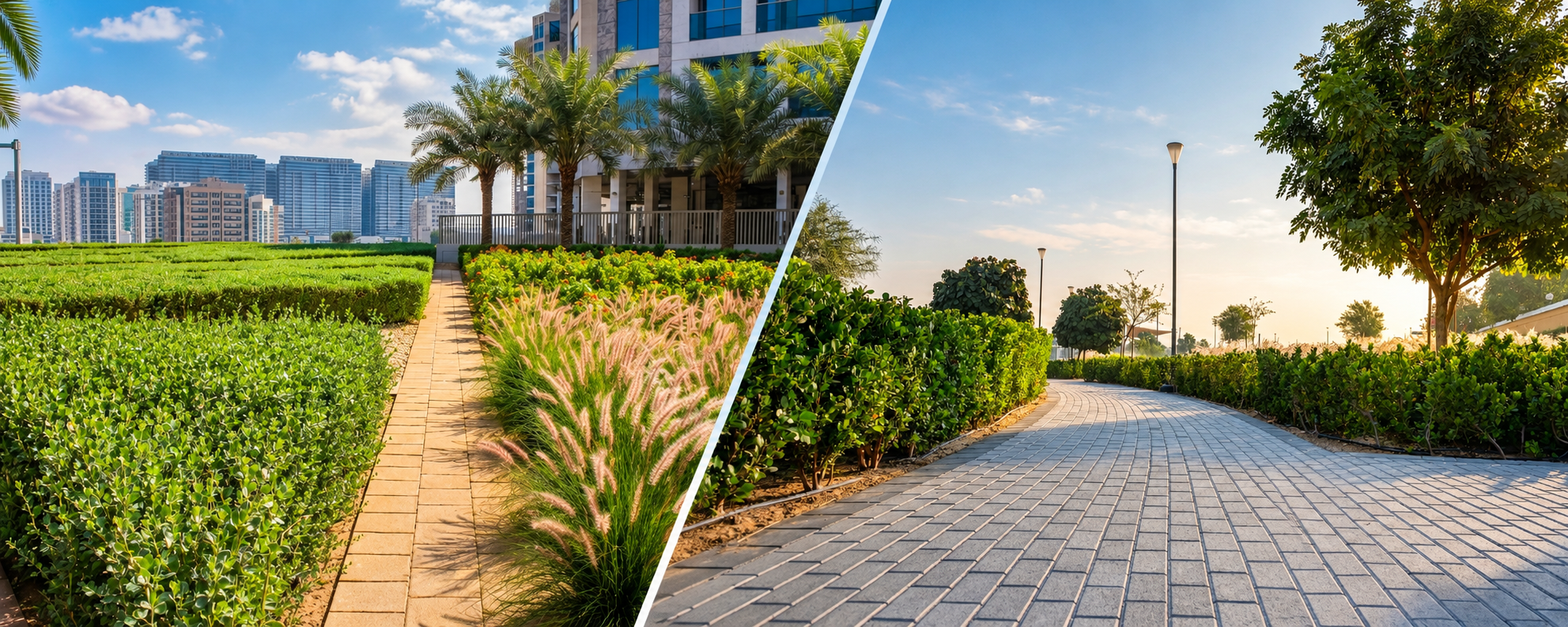
A successful landscape combines more than attractive plants or decorative paving. It brings together built features and living elements to create an outdoor space that looks balanced, feels welcoming and serves a practical purpose.
Two of the most important components of landscape design are hardscape and softscape. Hardscape includes non-living features such as pathways, patios, walls and outdoor structures. Softscape includes living elements such as trees, shrubs, lawns, flowers and groundcovers.
For homeowners, developers and facility managers in Dubai, understanding the difference between these two approaches can make it easier to plan a garden, upgrade a commercial property or design a shared outdoor environment. This guide explains their key differences, benefits and how to combine them effectively.
What Is Hardscape Landscaping?
Hardscape landscaping refers to the non-living, constructed elements of an outdoor environment. These features provide structure, define different zones and support the practical use of a garden or public space.
Hardscape can be functional, decorative or both. It can guide movement, create outdoor living areas, connect entrances and seating areas, and help organise a property's overall layout.
Common Hardscape Features
- Pathways and walkways: Create clear routes between entrances, garden areas and outdoor facilities.
- Patios and paved areas: Provide usable space for dining, relaxing and gathering.
- Retaining walls and steps: Help manage changes in ground level when appropriately designed.
- Edging and borders: Separate lawns, planting beds and paved surfaces.
- Pergolas and outdoor structures: Define seating areas and can provide shade when designed for the site.
- Decorative stone and paving: Introduce texture, patterns and visual definition.
- Outdoor installations: Include selected built features that complement the architecture and landscape.
Material selection is important. In Dubai, exposed surfaces should be assessed for heat, slip resistance, durability, drainage and maintenance needs. Appropriate base preparation and installation methods also influence how well hardscape features perform over time.
Learn more about KTC Landscaping's hardscape services for pathways, paved areas and other structural landscape elements.
What Is Softscape Landscaping?
Softscape landscaping includes the living and growing elements of an outdoor space. Plants introduce colour, texture and natural variation while helping connect buildings and built features with their surroundings.
Effective softscape design involves more than choosing attractive plants. Plant selection, spacing, soil conditions, sunlight, irrigation and ongoing maintenance all affect the health and appearance of a landscape.
Common Softscape Features
- Trees and palms: Add height and, when positioned appropriately, can provide shade.
- Shrubs and hedges: Define boundaries and create structure within planting schemes.
- Flowering plants: Add colour and seasonal interest.
- Lawns and groundcovers: Create green surfaces and soften paved areas.
- Planting beds: Organise different varieties into coordinated compositions.
- Climate-adapted plants: Help align planting choices with local environmental conditions and water availability.
In Dubai, planting plans should account for high temperatures, intense sunlight, soil conditions and irrigation needs. Select plants for the actual site rather than appearance alone, and allow enough room for mature growth.
Grouping plants with similar water requirements can simplify irrigation planning and help avoid overwatering some areas while leaving others too dry. Explore KTC Landscaping's softscape services for planting schemes suited to residential, commercial and community spaces.
Hardscape vs Softscape: Key Differences
Hardscape and softscape serve different purposes, but they are most effective when considered together. The following comparison highlights how they differ in materials, functions, installation and maintenance.
| Factor | Hardscape | Softscape |
|---|---|---|
| Components | Non-living, constructed features | Living plants and greenery |
| Examples | Patios, paving, walls and paths | Trees, shrubs, lawns and flowers |
| Main role | Structure, access and usable areas | Greenery, texture and natural appeal |
| Installation | Site preparation and construction | Soil preparation and planting |
| Maintenance | Cleaning, joint care and surface inspections | Watering, pruning and plant health checks |
| Changes over time | Usually changes through wear and weathering | Grows and changes with plant maturity and seasons |
Neither approach is automatically better than the other. The right balance depends on the site's size, intended use, design objectives, local conditions and available maintenance resources.
Hardscape establishes the framework of a landscape, while softscape brings it to life. Plan both together so pathways, planting beds, shade and outdoor activity areas complement one another.
Benefits of Hardscape Landscaping
Hardscape features help make outdoor spaces organised, accessible and practical. When properly planned and installed, they can support daily use while adding visual definition to the landscape.
1. Creates Functional Outdoor Areas
Patios, seating areas and pathways make it easier to move through a garden and use different zones. A patio can provide room for outdoor dining, while clearly planned walkways connect entrances, planting beds and recreational areas.
2. Defines the Landscape Layout
Paving patterns, edging, steps and walls establish boundaries and transitions between areas. This structure helps organise the overall design and coordinate furniture, planting and lighting.
3. Offers Durable Surfaces
Suitable hardscape materials can provide long-lasting surfaces when selected for the intended use and installed correctly. Appropriate foundations, drainage and joint detailing can help reduce avoidable repairs.
4. Helps Address Changes in Elevation
Where a site includes slopes or different ground levels, appropriately designed steps, retaining structures and terraces can help organise the space. These features should account for site conditions, drainage and relevant structural requirements.
Explore hardscape landscaping solutions when planning durable outdoor routes, patios and functional landscape zones.
Benefits of Softscape Landscaping
Softscape brings natural character to outdoor environments. Thoughtful plant selection and placement can improve visual balance and support the practical use of a landscape.
1. Adds Colour, Texture and Visual Interest
Trees, shrubs, flowers and groundcovers create variation in height, shape and colour. Combining different plant types can add depth and help a landscape feel more welcoming throughout the year.
2. Can Provide Shade and Comfort
Appropriately positioned trees can shade selected outdoor areas. Their effectiveness depends on the species, mature canopy, orientation and the amount of sunlight reaching the site. Planting should also account for root growth and nearby structures.
3. Supports Local Biodiversity
Suitable vegetation can provide habitat and food resources for wildlife and contribute to local biodiversity. The extent of these benefits depends on plant selection, site conditions and ongoing care.
4. Softens Built Features
Planting beds beside pathways, shrubs near seating areas and trees around open paved spaces can soften hard architectural lines. This creates a more balanced transition between built features and natural elements.
Learn more about softscape landscaping for planting plans that complement your property's architecture and intended use.
Why the Right Balance Matters in Dubai
Dubai's climate creates specific considerations for landscape design. High temperatures, strong sunlight and limited rainfall influence plant selection, irrigation planning, material performance and maintenance requirements.
A landscape that relies heavily on plants may need more irrigation and horticultural care than expected if unsuitable species are selected. On the other hand, an outdoor area dominated by hard surfaces may offer limited greenery and can become uncomfortable in direct sunlight.
A balanced design can combine a practical paved area, shaded seating, clear pathways and planting beds with climate-adapted species. For commercial properties, this could include durable pedestrian routes, organised gathering areas and greenery that complements the building.
Coordinate Irrigation Early
Irrigation should be planned alongside planting, particularly when trees, shrubs and lawns have different water requirements. Appropriate zoning, suitable delivery methods and regular inspections can help manage water use. See irrigation services for more information.
Plan for Lighting and Outdoor Use
Outdoor lighting can highlight pathways, planting beds and architectural details after sunset. Structures can define seating areas and provide shade where suitable. Explore external lighting and outdoor structures when planning a complete outdoor environment.
How to Combine Hardscape and Softscape
The ideal balance depends on how the outdoor space will be used, its size, environmental conditions and the level of maintenance that can be provided. These steps can help guide the planning process.
1. Define the Purpose of the Space
Identify the activities the area needs to support. A family garden may need seating, pathways and planting, while a commercial property may prioritise pedestrian circulation, durable surfaces and planting that complements the building.
2. Assess the Site
Review the available space, existing structures, sunlight, soil, access and drainage. Smaller gardens may benefit from compact paved areas and layered planting, while larger landscapes can accommodate several outdoor zones.
3. Select Compatible Materials and Plants
Choose hardscape materials based on durability, slip resistance, appearance and maintenance needs. Select plants according to sunlight, soil, water requirements and mature size. Coordinating these choices helps create a consistent design.
4. Plan for Maintenance
Hardscape may need cleaning, joint care and surface inspections. Softscape requires watering, pruning, weed control and plant-health monitoring. Consider the available time and resources before finalising the plan.
A tailored landscape maintenance programme can help keep the completed space in good condition.
5. Consider Additional Features
Depending on the project, the design may include pools, water features, playgrounds, fitness areas or sports facilities. These additions should be planned around safety, access, available space and maintenance requirements. Explore pools and water features, play, fitness and sports equipment, and MUGA court surfaces and finishes.
Common Landscaping Mistakes to Avoid
Even an attractive design can create problems when practical requirements are overlooked. Consider these common mistakes before starting a landscaping project.
- Choosing plants without checking suitability: Heat, sunlight, soil and water requirements all affect plant performance.
- Using too much paving: Excessive hard surfaces can reduce planting opportunities and visual balance.
- Ignoring drainage: Poor drainage can contribute to standing water, surface deterioration and plant problems.
- Planning irrigation too late: Retrofitting irrigation after construction may add cost and disruption.
- Selecting materials on appearance alone: Outdoor surfaces must also meet practical performance and maintenance requirements.
- Underestimating ongoing care: Both built surfaces and planting need appropriate inspections and maintenance.
- Ignoring mature plant size: Insufficient spacing can lead to overcrowding or interference with pathways and structures.
A coordinated plan helps address these issues before installation and supports a more practical long-term result.
Complete Landscaping Solutions
Explore our services to find suitable solutions for residential, commercial and community outdoor projects.
Bring Hardscape and Softscape Together
Hardscape and softscape landscaping serve different purposes, but both contribute to a successful outdoor environment. Hardscape provides structure, access and usable areas, while softscape adds greenery, texture and natural character.
For projects in Dubai, the right combination depends on the site's conditions, intended use, material and plant selection, irrigation planning and long-term maintenance needs.
By planning these elements together, property owners can create outdoor spaces that are functional, visually balanced and suited to their requirements. Whether you are designing a villa garden, upgrading a commercial property or improving a shared outdoor area, a coordinated approach can support a better long-term result.
KTC Landscaping offers solutions across hardscape, softscape, irrigation, lighting, water features and maintenance to help bring outdoor project requirements together.
Ready to Transform Your Outdoor Space?
Discuss your landscaping requirements with our team and explore a solution tailored to your property, design preferences and long-term needs.
Plan Your Landscape